From "exterminator near me" to a pro at your Katy door
You dial one number, describe what you're seeing, and get connected with a licensed pest pro who works your part of the Katy area. No form, no waiting on an email.
What the phone call covers
The pro will ask a handful of plain questions so they show up with the right gear:
- What you've seen, and where: droppings in the pantry, a mud tube on the slab, wasps at the eave.
- Your ZIP code, so they know whether you're in the City of Katy, Cinco Ranch, Fulshear or farther out.
- The home: one or two stories, roughly when it was built, slab or pier-and-beam.
- Who lives there, especially small kids, pets, fish tanks or anyone with breathing problems.
- What's been tried, including store-bought baits, sprays or a past company's treatment.
Things to have ready before you call
A phone photo of droppings, a dead insect or a nest saves a lot of guessing. Jot down when you first noticed the problem and whether it's getting worse. If you rent, have your landlord's or property manager's contact handy, and if your HOA limits yard treatments or signage, mention that up front.
The inspection at your home
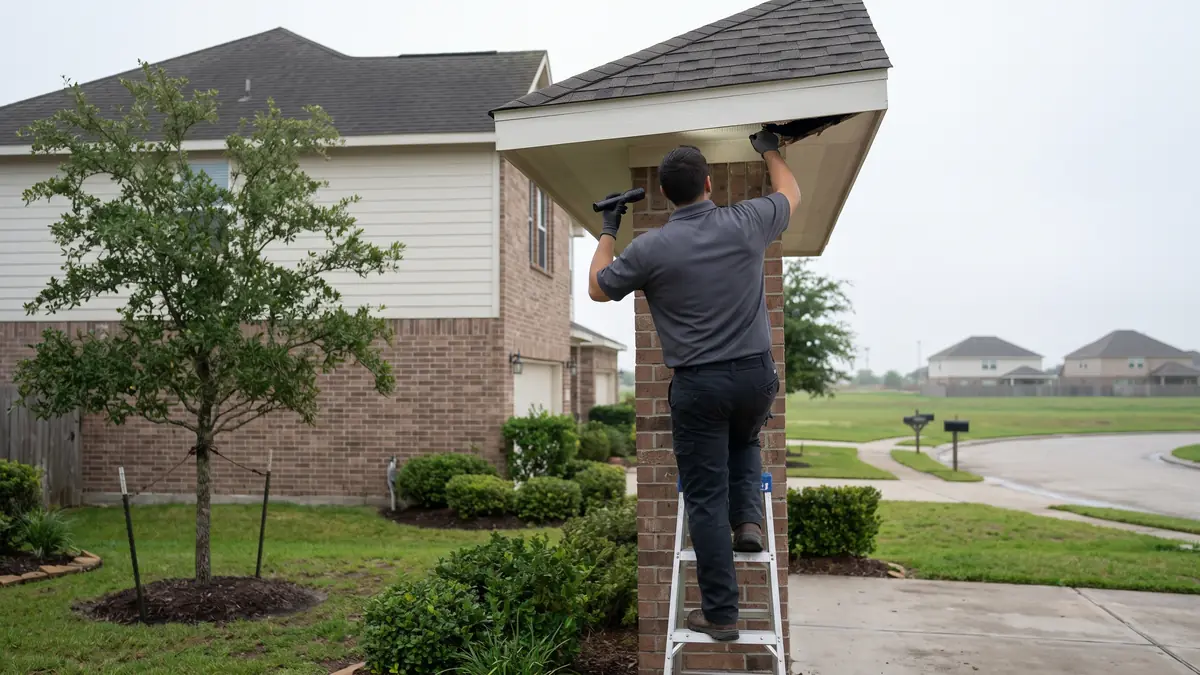
A real inspection takes longer than a spray. For rodents, expect the pro to climb into the attic, look at roof vents, soffits, the garage door frame and where AC lines enter the wall. For termites, they'll walk the slab edge, check weep holes in the brick and probe any soft trim. For ants and mosquitoes, they'll walk the yard, beds, downspouts and any water that sits after rain.
Afterward, they should show you what they found, in photos if you weren't in the attic with them.
The treatment plan and follow-ups
You should get a written plan that names the pest, the products or devices, where they'll go, and the price. Some jobs are one visit. Others need return trips by design:
- Rodents: trap checks over the following weeks, then sealing the entry points once activity stops.
- Bed bugs: a follow-up inspection, and sometimes a second treatment, after eggs have had time to hatch.
- Termites: a monitoring or warranty schedule, depending on whether you choose a liquid barrier or baits.
- General pests: quarterly exterior service if you choose an ongoing plan.
What a licensed Texas pro has to do
Structural pest control in Texas is regulated by the Texas Department of Agriculture (TDA). The business holds a license with a TPCL number, and the people doing the work carry their own certified applicator, technician or apprentice license.
Before or during an indoor treatment, the applicator must make TDA's consumer information sheet available. In an owner-occupied house it goes to the owner. In a rental with fewer than five units, any resident can ask for it at each treatment. For properties with five or more units, the owner or manager must give residents 48 hours' notice before treatment.
The business also has to keep a record of every pesticide use for two years: the product names and EPA registration numbers, amounts applied, the target pest, the dates and who applied them. TDA can inspect those records on request.
Checking a license yourself
Ask the pro for their license and check the truck for a TPCL number. TDA calls a missing number on the vehicle a red flag. Then compare names against TDA's downloadable lists of active licensees, which cover commercial businesses, applicators, technicians and apprentices. If something goes wrong, the TDA consumer page explains how to report misuse or file a complaint.
Ready? Use the call checklist to get your notes together, or start with what's bugging you on the home page.
Questions about the call and the visit
Will the pest pro quote a price on the phone?
Often you'll get a rough range on the phone, but the firm price comes after the inspection. A German roach problem in one kitchen and a rat problem with five attic entry points look the same in a two-minute description, yet the work is very different. A good pro walks the home first, then puts the plan and price in writing before treating. If anything changes the scope later, such as finding termite damage behind a wall, they should tell you before doing extra work.
Do I have to be home for a pest inspection in the Katy area?
For a first visit, yes, an adult should be there to let the pro in and walk through what you've seen. They'll need the attic hatch, garage and any rooms with activity open, and you can point out where you found droppings or bites. Later visits, such as quarterly exterior service or checking traps along the outside, can sometimes be done without you home if you agree on gate access ahead of time.
What paperwork should I get after a pest treatment in Texas?
Before or during an indoor treatment of your own home, the licensed applicator must make the Texas Department of Agriculture's consumer information sheet available to you. Ask for a service ticket too, listing what was applied, where and for which pest. The business must keep pesticide use records for two years, including product names, EPA registration numbers and amounts used, so keep your ticket with the house file in case you ever sell.
How can I tell if a pest control company in Texas is licensed?
Ask to see the license and look for the business's Texas Pest Control License (TPCL) number on the truck. The Texas Department of Agriculture calls a missing TPCL number on the vehicle a major red flag. TDA also publishes downloadable lists of every active commercial business, certified applicator, technician and apprentice, so you can search a business name or a person's name before signing anything.
Sources
- Texas Administrative Code, 4 TAC §7.147: Consumer Information Sheet (via Cornell LII)
- Texas Administrative Code, 4 TAC §7.144: Pest Control Use Records (via Cornell LII)
- Texas Department of Agriculture: Structural Pest Control Reports, Current Licenses
- Texas Department of Agriculture: Structural Pest Control Consumer Information
- Texas Department of Agriculture: Commissioner warns Texans about unlicensed pesticide applicators